

Table of Contents
- How Long Do Handmade Wigs Last? The Honest Answer
- What Determines the Lifespan of a Handmade Wig
- Maintaining Human Hair Wigs for Longevity
- Signs a Human Hair Wig Is Wearing Out
- How to Store Handmade Wigs Properly
- Can Professional Maintenance Extend the Life of a Luxury Wig?
- Frequently Asked Questions
Last Updated: September 27, 2026
How Long Do Handmade Wigs Last? The Honest Answer
A well-made handmade wig, cared for properly, will typically last between 12 and 24 months of regular wear. That range assumes genuine human hair, a hand-tied lace cap, and a realistic maintenance routine. Get any of those three wrong and the timeline collapses.
This guide from Wigs Ldn covers exactly what shortens a wig's life, how to spot the warning signs early, and how to store handmade wigs properly so you get the full two years rather than six months.
Most buyers ask the wrong question. They want a single number. The better question is what you're willing to do each week to protect the investment. Below, we break down the factors that actually decide lifespan, plus a maintenance schedule you can follow from day one.
What Determines the Lifespan of a Handmade Wig
Three things decide how long a handmade wig lasts: the quality of the hair, the construction of the cap, and how often you wear and style it. Change any one of these and the lifespan shifts, sometimes by a year or more.
Hair Quality and Lace Type
Handmade wigs are built strand by strand, which is why they cost more and last longer than machine-wefted alternatives. The hair source matters most. Virgin human hair with intact cuticles holds moisture and resists tangling far better than processed hair, which has been stripped and coated to look smooth. A hand-tied lace front or full lace cap distributes tension across the scalp rather than pulling on a few anchor points, so the cap itself survives longer. According to NHS guidance on caring for wigs during hair loss, gentle handling and correct fitting both reduce wear on the cap and the hair.
Wear Frequency and How You Style It
Daily wear accelerates everything. A wig worn five days a week will need replacing roughly twice as often as one worn for occasions. Heat is the other silent killer. Straighteners and curling tongs above 180°C break down the protein structure of human hair over time, and that damage does not reverse. Tight braiding underneath, constant brushing while dry, and sleeping in the wig all shorten its working life.
Maintaining Human Hair Wigs for Longevity
Maintaining human hair wigs for longevity comes down to a simple rhythm: wash less often than you think, condition more than you think, and keep heat to a minimum.
A practical weekly and monthly routine looks like this:
- Wash every 8 to 10 wears using sulphate-free shampoo in lukewarm water
- Deep condition every third wash and leave it for at least 20 minutes
- Detangle from the ends upward with a wide-tooth comb while damp
- Limit heat styling to 180°C and always use a heat protectant
- Never brush the wig while it is dry and tangled, as this snaps the strands
What most guides miss is that the lace is often the first thing to fail, not the hair. Lace frays at the hairline from repeated adhesive and removal. If you wear a glueless wig, you avoid most of that wear entirely, which is one reason glueless construction tends to extend the overall lifespan.
Signs a Human Hair Wig Is Wearing Out
Knowing the signs a human hair wig is wearing out lets you act before the damage is permanent. The hair and the cap usually fail at different times, so watch both.
Look for these signals:
- Shedding that leaves visible strands on your comb after every wear
- Dryness that no amount of conditioning seems to fix
- Matting at the nape and crown that returns within hours of detangling
- Fraying, torn, or stretched lace along the hairline
- Elastic or clips that no longer hold the wig securely
Once hair is genuinely matted at the mid-lengths, it cannot be repaired at home. That is the point where professional restoration becomes the smarter financial call than replacing the wig outright.

How to Store Handmade Wigs Properly
Storing handmade wigs properly means keeping them off flat surfaces, away from sunlight, and in a breathable container. A wig left crumpled in a drawer will crease at the crown and tangle at the ends within days.
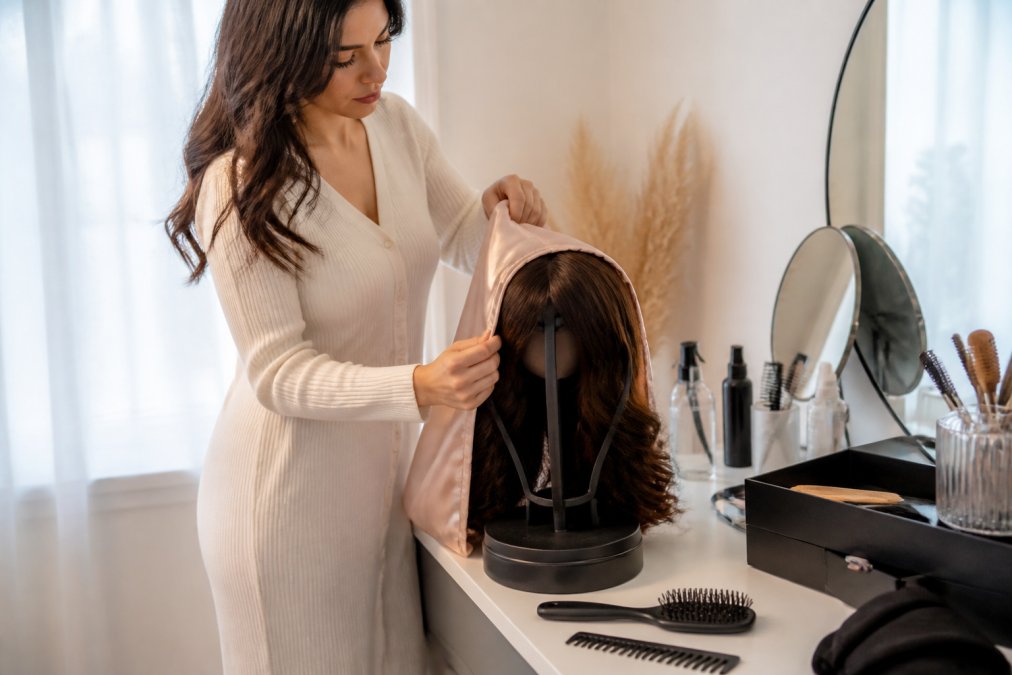
The routine that works:
- Place the wig on a stand or mannequin head so the cap keeps its shape
- Cover it with a silk or satin bag, never plastic, which traps moisture
- Store it away from direct sunlight, which fades colour over time
- Keep it in a cool, dry spot rather than a humid bathroom
- Store long wigs in a loose plait to prevent tangling
For wigs you wear only occasionally, rotate them rather than leaving one on display for months. Hair that sits untouched still dries out and loses its natural oils.
Can Professional Maintenance Extend the Life of a Luxury Wig?
Professional maintenance can add months to a luxury wig's life, and often costs far less than a replacement. The catch is timing. Book restoration before the hair is beyond saving, not after.

At Wigs Ldn, our Restore and Repair service includes a deep conditioning treatment with professional-grade products, expert styling, re-sewing of loose tracks, and replacement of elastic and clips where needed. Cutting, colouring, and lace repair are available at an extra cost. For wigs that only need a refresh, our Wig Cut & Restyle service revives split ends and shape without a full restoration.
Here is how the options compare:
| Service | What It Covers | Price | Best For |
|---|---|---|---|
| Restore and Repair | Deep conditioning, styling, re-sewing, clips | £150.00 | Wigs with matting or loose tracks |
| Wig Cut & Restyle | Cut and restyle only | £50.00 | Wigs with split ends, no damage |
| Restyle Service | Styling and setting for an occasion | £35.00 | Special events, clean wigs |
| Wig Consultation | Measuring, samples, texture and colour advice | £50.00 | First-time custom buyers |
A consultation is worth it if you are unsure whether your wig can be saved. It also helps if you are ordering a custom piece and want the fit right the first time. For anyone weighing up repair against replacement, the honest rule is this: if the lace is intact and the hair is not matted at the mid-lengths, restoration is almost always the better value.
Frequently Asked Questions
How often should you wash a handmade human hair wig?
Wash your handmade wig every 8 to 10 wears, or sooner if you use heavy styling products. Daily wearers typically wash once a week; occasional wearers can stretch to every two to three weeks. Always use sulphate-free shampoo and lukewarm water, then condition the mid-lengths and ends. Over-washing strips natural oils and speeds up shedding, so let the wig tell you when it needs a clean rather than sticking to a rigid schedule.
Does daily wear affect the lifespan of a handmade wig?
Yes. Wearing a handmade wig every day shortens its life to roughly 6 to 12 months, compared with 12 to 18 months for occasional wear. Daily friction against collars, pillows and styling tools causes gradual shedding and lace wear. Rotating between two wigs, letting each rest on a stand between wears, and keeping heat styling below 180°C all help slow that decline.
Is there a difference in lifespan between hand-tied and machine-wefted wigs?
Hand-tied wigs generally last longer because each strand is knotted individually, which distributes tension more evenly and reduces shedding. Machine-wefted wigs are quicker to produce and cheaper, but the wefts can loosen with repeated washing. With proper care, maintaining human hair wigs for longevity means a hand-tied piece can comfortably outlast a machine-made one by several months.
Can professional maintenance extend the life of a luxury wig?
Yes. A professional restore and repair service deep conditions the hair, re-sews loose tracks and replaces worn elastic or clips, which can add months of wear. At Wigs Ldn this service starts at £150, with cutting, colouring and lace repair available at extra cost. Booking a restyle at £35 or a cut and restyle at £50 between full restorations also keeps the shape fresh without replacing the wig.
Handmade wigs reward careful owners, and the difference between a six-month wig and a two-year wig is usually routine, not luck. If your current wig is matting, shedding, or simply looking tired, Wigs Ldn can help. Our made-to-order wigs are crafted in the UK with glueless options, customisable textures and colours, and a 30-day money-back guarantee, plus free worldwide delivery and same-day or next-day options. Get started with Wigs Ldn and give your hair the lifespan it deserves.