

Table of Contents
- How Long Do Premium Human Hair Wigs Last?
- What Determines the Lifespan of Premium Human Hair Wigs?
- Your Human Hair Wig Maintenance Routine
- How to Wash a Human Hair Wig Without Damaging It
- Storing Human Hair Wigs Correctly Between Wears
- Signs Your Wig Needs Replacing
- When to Repair or Restyle Instead of Replace
- Frequently Asked Questions
Last Updated: September 10, 2026
How Long Do Premium Human Hair Wigs Last?
A well-made premium human hair wig typically lasts between twelve and twenty-four months with consistent wear, and considerably longer if you rotate it with other pieces (peer-reviewed research). At Wigs Ldn, we make every wig to order, and the lifespan question comes up more than any other. The honest answer depends less on the price tag than on three things: the quality of the hair, how often you wear it, and how you treat it between wears. Below, we break down exactly what shortens a wig's life and how to get the most from yours.
What Determines the Lifespan of Premium Human Hair Wigs?
Lifespan comes down to hair quality, processing, and daily wear conditions. Two wigs bought on the same day can age very differently depending on these factors.
Hair Type and Processing
Virgin, unprocessed hair keeps its cuticle intact, so it resists tangling and shedding far better than heavily processed hair (peer-reviewed research). Hair that has been bleached, relaxed, or repeatedly coloured loses cuticle layers and dries out faster. If you want maximum durability, choose the least-processed texture that suits your look.
Wear Frequency and Environment
Daily wear accelerates everything. Heat styling, sun exposure, chlorine, and even hard water all strip moisture from the hair shaft (the American Academy of Dermatology). A wig worn twice a week will outlast an identical one worn every day by a wide margin.
Your Human Hair Wig Maintenance Routine
A consistent human hair wig maintenance routine is the single biggest factor you control. Treat the wig like your own hair, but more gently.
- Brush from the ends upward using a wide-tooth comb or loop brush
- Detangle before washing, never during
- Apply a light leave-in conditioner to mid-lengths and ends
- Store on a stand or in a silk bag overnight
- Avoid heavy oils near the lace or cap
The thing nobody tells you about maintenance is that frequency matters more than intensity. A two-minute detangle every evening prevents the matting that forces an early replacement.
How to Wash a Human Hair Wig Without Damaging It
Wash a human hair wig every six to ten wears, or sooner if you have used heavy styling products. Over-washing is the most common mistake we see, and it dries out the hair faster than almost anything else.
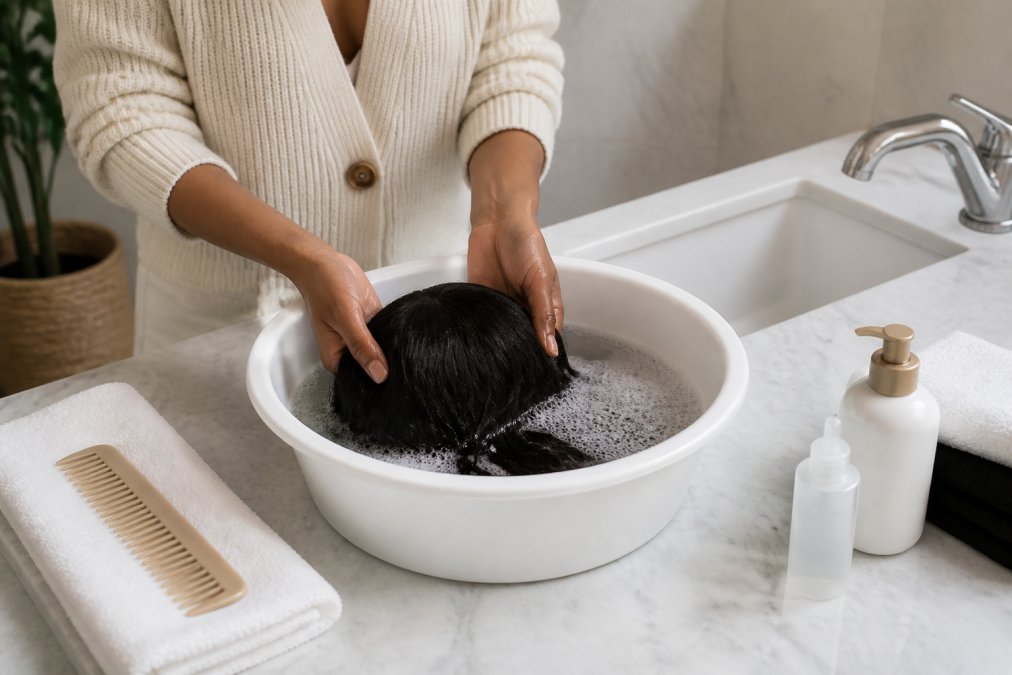
Use lukewarm water and a sulphate-free shampoo. Fill a basin, dip the wig, and let it soak for a few minutes. Work shampoo down the length with your fingers, never scrunch or twist. Rinse until the water runs clear, then apply conditioner from mid-length to ends and leave it for five minutes. Pat dry with a towel, place on a stand, and let it air dry completely before styling. Never brush a wet wig.
Storing Human Hair Wigs Correctly Between Wears
Storing human hair wigs correctly protects the shape, the lace, and the cuticle. A wig tossed into a drawer will tangle, crease, and pick up dust.
- Use a wig stand for daily storage
- For travel, use a silk or satin bag inside a hard case
- Keep wigs away from direct sunlight and radiators
- Never store a damp wig; let it dry fully first
- Keep lace away from rough surfaces that snag
A common mistake is storing a wig while it still holds styling product. Residue sets into the fibres over time and dulls the shine.
Signs Your Wig Needs Replacing
Watch for these signals that a wig is nearing the end of its life:
- Shedding that leaves hair on your brush every time
- Matting that returns within hours of detangling
- Dry, brittle ends that no treatment revives
- Thinning at the crown or parting
- A cap that has lost its stretch or grip
If you spot one or two of these, a repair service may buy you more time. If most of them apply, replacement is usually the better value.

When to Repair or Restyle Instead of Replace
Repair often makes more financial sense than replacement, especially for premium pieces. At Wigs Ldn, our Restore and Repair service revives tired wigs with a deep conditioning treatment, expert styling, re-sewn tracks, and replacement elastics and clips where needed. A Wig Cut & Restyle refreshes split ends and shape for £50, while a lighter Restyle Service sets a new look for £35. If you are unsure whether your wig is worth saving, a Wig Consultation gives you a professional assessment before you commit to anything.
That said, repair has limits. Once the hair itself has lost its cuticle and the cap has stretched, no service will restore the original quality.
A wig that mats within days or sheds constantly is telling you something, and it is rarely worth ignoring. At Wigs Ldn, every piece is made to order in the UK, so you get hair that is chosen for durability rather than volume alone. Our glueless designs stay secure without adhesive, our 30-day money-back guarantee removes the risk, and free worldwide delivery with same-day and next-day options means you are never left waiting. Get started with Wigs Ldn and wear a wig that looks natural from the first day to the last.
Frequently Asked Questions
How often should you replace a human hair wig?
Most premium human hair wigs need replacing every 12 to 18 months with regular wear, though some last two years or more with careful maintenance. The exact timing depends on how often you wear it, how you wash and store it, and the quality of the hair. If you rotate between two or three wigs, each one lasts longer because it rests between wears. Watch for thinning lace, shedding, or matting that no longer responds to conditioning.
Does daily wear reduce the lifespan of a human hair wig?
Yes. Wearing the same wig every day exposes it to friction, sweat, and styling heat constantly, which speeds up drying and matting. Daily wearers typically see a wig last 9 to 12 months rather than 18. Rotating between two wigs, letting each rest, and keeping heat styling to a minimum can add months to the lifespan of premium human hair wigs.
How does washing frequency affect wig longevity?
Washing too often strips natural oils and dries the hair, while washing too rarely lets product build-up and oils cause matting. For a wig worn daily, washing every 7 to 10 wears is a good benchmark. Always use sulphate-free shampoo and lukewarm water, and follow with a deep conditioner. A gentle human hair wig maintenance routine protects the cuticle and keeps the hair supple far longer.
Can you extend the life of a premium human hair wig with proper care?
Absolutely. Correct washing, careful detangling from the ends upward, storing human hair wigs correctly on a wig stand or in a silk bag, and limiting heat tools all extend lifespan significantly. Booking a professional restore and repair service when you notice loose tracks or worn elastic also revives a wig that would otherwise be replaced, giving you months of extra wear from the same piece.