

Quick Summary
Hair shine comes from a smooth outer cuticle, so protect it rather than adding more product. Wash gently two or three times a week, condition every wash, finish with a cool rinse, and use a light oil on the mid-lengths and ends.
- Heat styling without protection is a common cause of dull hair.
- Wash gently two to three times a week to avoid stripping natural oils.
- Finish every wash with a short cool rinse to help seal the cuticle.
- Apply a light oil to mid-lengths and ends, not the roots.
- Pat hair dry with a cotton T-shirt rather than rubbing with a towel.
Table of Contents
- Why Hair Loses Its Shine
- Building a Hair Care Routine for Shiny Hair
- Washing Frequency and Water Temperature
- Choosing Natural Oils for Shiny Hair
- How to Reduce Frizz Naturally
- How to Maintain Shine in a Human Hair Wig
- Putting Your Shine Routine Into Practice
- Frequently Asked Questions
Why Hair Loses Its Shine
Dull hair is usually a sign that the outer layer of each strand, the cuticle, is rough or damaged, which is why hair shine fades over time. Smooth cuticles reflect light evenly, which is what makes hair look glossy. When they lift or chip, light scatters and the hair looks flat.
Several everyday habits cause that roughness. Heat styling, frequent colouring, sun exposure, hard water and rough towel-drying all take their toll over time.
Common causes include:
- Heat from straighteners and hairdryers used without protection
- Over-washing with harsh shampoos that strip natural oils
- Sun and chlorine exposure from pools
- Friction from rough towels or tight, pulling styles
- Hard water leaving mineral residue on the hair
In practice, most people notice shine loss gradually. The fix starts with protecting the cuticle, not with adding more product.
Building a Hair Care Routine for Shiny Hair
A simple routine works better than a long list of products when you want lasting hair shine. Start with a gentle cleanser, use a conditioner on the lengths and ends, and finish with a light oil or serum.
Here is a basic weekly routine that many people find easy to keep up:
| Step | How Often | Purpose |
|---|---|---|
| Gentle wash | 2-3 times a week | Removes build-up without stripping |
| Conditioner | Every wash | Smooths the cuticle |
| Natural oil treatment | 1-2 times a week | Adds gloss and softness |
| Heat protection spray | Before any heat styling | Limits cuticle damage |
Watch out: heavy oil on fine hair can weigh it down and make it look greasy. Start with a small amount and build up slowly.
Washing Frequency and Water Temperature
Washing too often can strip the natural oils that keep hair looking healthy. Washing too rarely can leave build-up that dulls the surface. Most people do best washing when their scalp feels oily or their hair looks flat.
According to the American Academy of Dermatology, how often you wash depends on how quickly your hair gets dirty or oily, so a fixed schedule may not suit everyone (the American Academy of Dermatology).
Water temperature matters too. Warm water opens the cuticle, while a final rinse with cool water helps seal it and lock in shine. Try finishing every wash with a short cool rinse.
Choosing Natural Oils for Shiny Hair
Natural oils can add gloss and help protect hair from dryness. Lighter oils tend to suit fine hair, while richer oils suit thick or coarse hair.
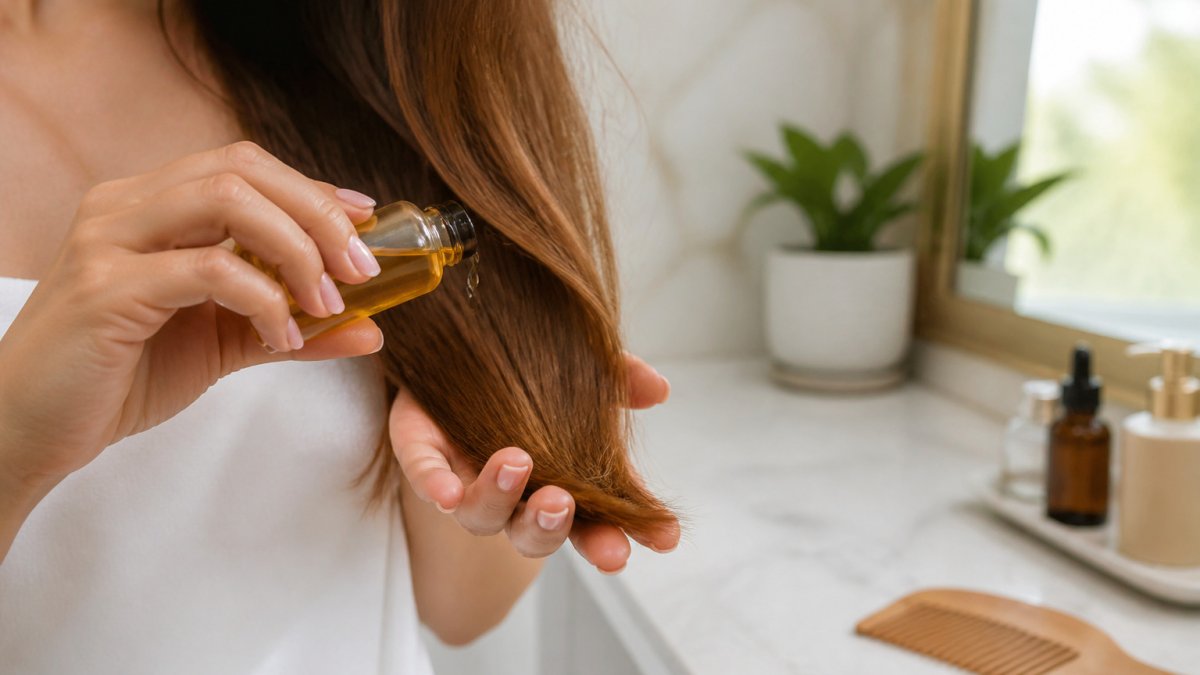
Popular options include:
- Argan oil for smoothing and light shine
- Jojoba oil, which is close to the scalp's own oils
- Coconut oil for deeper conditioning, best used sparingly
- Argan or jojoba blends for fine hair
Apply oil to mid-lengths and ends rather than the roots. Work a few drops through damp or dry hair, then comb through evenly.
How to Reduce Frizz Naturally
Frizz happens when hair lacks moisture or its cuticle is raised. Keeping hair hydrated and handling it gently makes the biggest difference.
Pat hair with a soft cotton T-shirt instead of rubbing with a towel. Detangle gently with a wide-tooth comb while hair is damp and conditioned. Avoid brushing dry hair, which creates static and flyaways.
A few drops of oil on damp ends can also calm frizz without weighing hair down.
How to Maintain Shine in a Human Hair Wig
Wigs made from human hair can look just as glossy as natural hair when cared for properly. The same principles apply: gentle washing, light conditioning and careful styling.
Putting Your Shine Routine Into Practice
Start small. Pick two or three steps from this guide and stick with them for four weeks. Notice how your hair feels and looks, then adjust.
Frequently Asked Questions
How can I make my hair shiny naturally?
Start with a consistent routine: wash with a gentle shampoo, condition the lengths and ends, and rinse with cool or lukewarm water to help the cuticle lie flat. Pat hair dry with a microfibre towel rather than rubbing it, and allow it to air dry where possible. Brush gently with a boar bristle brush to spread the scalp's natural oils down the lengths. Small, regular habits tend to produce more visible shine than occasional intensive treatments.
How often should I wash my hair to keep it shiny?
There is no single schedule that suits everyone. The American Academy of Dermatology advises washing according to how often hair becomes dirty or oily, so people with an oily scalp may need to wash daily while those with drier hair can go longer between washes. Many people find that washing every two to three days strikes a good balance. Over-washing can strip natural oils, while under-washing can leave build-up that dulls the hair.
How do I keep a human hair wig looking shiny?
Wash the wig only when needed, using a sulphate-free shampoo formulated for wigs or human hair, and work from the ends towards the root. Condition the lengths and avoid the cap. Pat dry in a towel, then air dry on a wig stand. Use a light amount of argan or jojoba oil on the lengths after drying, and keep heat styling to a minimum. Store the wig on a stand away from direct sunlight. For bespoke advice on your wig's care, contact Wigs Ldn directly.
