

Table of Contents
- Why Human Hair Wigs Need a Different Care Routine
- How to Wash a Human Hair Wig Without Causing Damage
- The Best Shampoo for Human Hair Wigs (And What to Avoid)
- Storing Human Hair Wigs to Prevent Tangling and Matting
- How Long Do Human Hair Wigs Last? Realistic Timelines
- Common Mistakes That Shorten Wig Lifespan
- When to Repair, Restyle, or Replace Your Wig
- Frequently Asked Questions
Last Updated: September 11, 2026
Why Human Hair Wigs Need a Different Care Routine
A human hair wig is a handcrafted, made-to-order hairpiece that behaves like your own hair because it is your own hair, just attached to a lace or silk base rather than your scalp. That single fact explains why maintaining human hair wigs for longevity looks nothing like caring for synthetic alternatives.
Synthetic fibres are plastic. They hold a style, resist water, and shrug off heat damage because there is no cuticle to strip. Human hair has a cuticle, and every wash, brush, and heat application either protects it or wears it down. Treat it like plastic and it will dry out, tangle, and shed within months.
At Wigs Ldn, our wigs are made to order in the UK. The care routine below is designed to help you maintain your investment.
How to Wash a Human Hair Wig Without Causing Damage
Wash a human hair wig every 8 to 12 wears, not every week (PubMed). Over-washing is the single fastest way to strip the natural oils that keep hair supple and shiny.
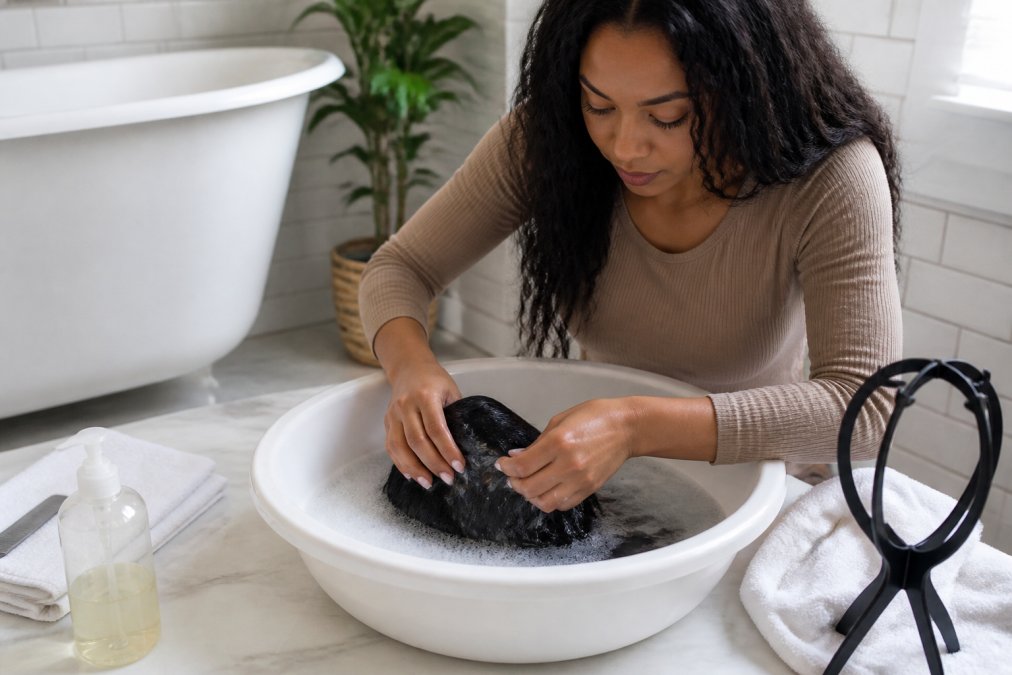
You will need: a wide-tooth comb, lukewarm water, sulphate-free shampoo, a deep conditioner, and a towel you do not mind sacrificing to hair product.
Step-by-Step Washing Process
- Detangle dry first. Comb from the ends upward with a wide-tooth comb. Never start at the roots.
- Fill a basin with lukewarm water. Hot water opens the cuticle and causes frizz; cold water does not clean effectively.
- Add sulphate-free shampoo and swish. Dip the wig and move it gently. Do not scrub or bunch the hair.
- Rinse in clean lukewarm water. Let water run in one direction, from cap to ends.
- Apply conditioner mid-length to ends. Avoid the lace and knots entirely.
- Blot, never wring. Press the wig between a towel to remove excess water.
- Air-dry on a wig stand. Never use a hairdryer on wet lace.
The Best Shampoo for Human Hair Wigs (And What to Avoid)
The best shampoo for human hair wigs is a sulphate-free, pH-balanced formula designed for colour-treated or dry hair. Sulphates strip the cuticle; the wrong formula ages a wig faster than daily wear (peer-reviewed research).
What to avoid:
- Sulphates (sodium lauryl sulphate and sodium laureth sulphate)
- Alcohol-based products, which dry out the hair shaft
- Heavy silicones that build up and dull the shine
- Standard high-street shampoo formulated for scalps, not hairpieces
What to look for:
- Sulphate-free and paraben-free formulas
- Ingredients like argan oil, keratin, or panthenol
- A leave-in conditioner for daily detangling
A deep conditioning treatment every 4 to 6 washes keeps the hair soft and reduces friction, which is what causes matting at the nape. If your wig has already lost its softness, our Restore and Repair service includes a professional deep conditioning treatment and re-sewing of loose tracks.

Storing Human Hair Wigs to Prevent Tangling and Matting
Storing human hair wigs correctly matters more than most people realise. A wig left in a drawer or on a mannequin unprotected will mat at the ends within weeks.
The right way to store:
- Place the wig on a wig stand or mannequin head so it holds its shape
- Cover it with a silk or satin cap to reduce friction
- Keep it away from direct sunlight, which fades colour
- Store in a cool, dry place, never a humid bathroom
For travel, turn the wig inside out, place it in a silk bag, and lay it flat. Never fold a wig in half, as the crease becomes a permanent bend in the hair.
How Long Do Human Hair Wigs Last? Realistic Timelines
A quality human hair wig lasts 12 to 24 months with proper care, and up to three years if worn infrequently and maintained well. Lifespan depends on how often you wear it, how you wash it, and whether you heat-style it.
| Wear Frequency | Expected Lifespan | Key Factor |
|---|---|---|
| Daily wear | 9-12 months | Heat styling and friction |
| 3-4 times weekly | 12-18 months | Washing frequency |
| Occasional / events | 2-3 years | Storage conditions |
The biggest variable is heat. Every pass of a straightener or curling wand breaks down the cuticle (the American Academy of Dermatology). If you style daily, expect the lower end of that range. If you rotate between two wigs, each one lasts longer because the wear is shared.
Common Mistakes That Shorten Wig Lifespan
Most wigs fail early for the same handful of reasons. Here is what to stop doing.
- Washing too often. Strips oils and dries the hair out.
- Brushing wet. Causes breakage and shedding at the knots.
- Using regular shampoo. Sulphates age the cuticle fast.
- Sleeping in the wig. Friction mats the hair overnight.
- Skipping the silk cap. Cotton pillowcases and rough storage cause tangles.
- Ignoring loose tracks. Small repairs become big ones when left.
When to Repair, Restyle, or Replace Your Wig
Repair a wig when the hair is still healthy but the construction is failing, such as loose tracks, stretched elastic, or torn lace. Restyle when the hair is fine but the cut or colour no longer suits you. Replace only when the hair itself is dry, brittle, and shedding throughout.
A restyle is far cheaper than a replacement. Our Wig Cut & Restyle service revives an old wig with a fresh cut for £50, and a Restyle service sets your wig for a special occasion for £35. For a full refresh, Restore and Repair at £150 includes deep conditioning, styling, re-sewing, and replacement of elastic and clips.


If you are unsure whether your wig is worth saving, a Wig Consultation gives you a professional assessment and the option to try on samples before committing to a new piece.
Maintaining human hair wigs for longevity comes down to a routine most people never get taught: wash less, condition more, store properly, and repair before you replace. At Wigs Ldn, every wig is made to order in the UK, backed by a 30-day money-back guarantee, with free worldwide delivery and same-day or next day options when you need it fast. Our glueless designs stay secure without adhesive, so you get a natural look with less hassle. Get started with Wigs Ldn and maintain your wig's beautiful appearance.
Frequently Asked Questions
How often should you wash a human hair wig?
Wash your human hair wig every 8 to 10 wears, or roughly once every two to three weeks if worn daily. Overwashing strips natural oils and causes dryness. If you use styling products regularly or sweat heavily, wash more often. Between washes, use a dry shampoo formulated for wigs or a damp cloth to refresh the lace front. Always detangle gently before washing to prevent knots from tightening.
What products should be avoided when maintaining human hair wigs?
Avoid sulphate-heavy shampoos, alcohol-based styling sprays, and any product containing parabens or silicones that build up on the hair shaft. These strip moisture and leave residue that makes the wig look dull. Skip regular human shampoo unless it is sulphate-free. Instead, use products designed specifically for human hair wigs, such as gentle cleansers and leave-in conditioners. Also avoid heavy waxes or pomades near the lace, as they clog the knots and cause shedding.
How do you store a human hair wig to prevent tangling?
Store your wig on a wig stand or mannequin head to hold its shape. For long-term storage, place it in a satin or silk bag, never plastic, which traps moisture and causes mildew. Keep it in a cool, dry place away from direct sunlight. If you are travelling, use a padded wig box and wrap the hair loosely in tissue paper. Always detangle and allow the wig to dry completely before storing to prevent matting and odour.
Can you use regular shampoo on a human hair wig?
Regular shampoo often contains sulphates and harsh detergents that strip the wig's natural oils, leaving it dry and brittle. While human hair wigs are made of real hair, they lack the scalp's natural oil production, so they need gentler care. Use a sulphate-free shampoo specifically formulated for wigs or colour-treated hair. If you must use regular shampoo, choose a gentle, moisturising formula and follow with a deep conditioner. Always dilute shampoo in water before applying to avoid direct contact with the lace.