

Last Updated: October 23, 2026
Quick Summary
European vs Indian hair differ primarily in texture, durability, and cost rather than quality. European hair is finer and silkier, lasting 2-3 years and costing £400-£600+, whilst Indian hair is thicker and more resilient, lasting 3-5 years at £300-£500. Your choice depends on your natural hair type, styling habits, and budget.
- Indian hair lasts 3-5 years with care; European hair typically lasts 2-3 years
- Indian hair costs £300-£500; European hair ranges from £400-£600+
- Indian hair suits thick natural hair and daily styling; European hair suits fine, thin hair
- Indian hair resists frizz better in humid conditions and holds curls longer
- European hair feels lighter on the scalp and requires minimal processing
Table of Contents
- European vs Indian Human Hair: Key Differences at a Glance
- Texture and Appearance: What Sets Them Apart
- How to Choose Human Hair for a Wig
- European Human Hair Wigs: Characteristics and Benefits
- Indian Human Hair Wigs: What You Need to Know
- Durability, Maintenance and Longevity
- Cost Comparison and Value for Money
- Making Your Final Choice
- Frequently Asked Questions
European vs Indian Human Hair: Key Differences at a Glance
When you're shopping for a human hair wig, the origin of the hair matters, but not in the way most people think. The belief that European hair is automatically superior to Indian hair is a common misconception. Research published in the International Journal of Cosmetic Science cautions that hair origin alone should not be treated as a reliable indicator of quality. What actually sets these two types apart are texture, processing methods, durability, and cost. Understanding these differences helps you choose the right wig for your needs and budget.
At Wigs Ldn, we create bespoke wigs that deliver natural-looking results. The choice between European vs Indian hair depends on your hair type, lifestyle, and what you're willing to invest. Below, we'll break down exactly what you need to know to make the right decision.
| Factor | European Hair | Indian Hair | Best For |
|---|---|---|---|
| Texture | Typically finer, silkier | Thicker, coarser strands | Fine texture: European; Volume: Indian |
| Colour range | Limited natural shades | Wider natural variation | Darker tones: Indian; Blonde/lighter: European |
| Processing | Lighter processing required | More processing typical | Low-maintenance: European; Versatility: Indian |
| Durability | 2-3 years average wear | 3-5 years with care | Long-term wear: Indian |
| Price point | £400-£600+ | £300-£500 | Budget-conscious: Indian |
| Best suited to | Fine, thin hair; lighter skin tones | Thick hair; darker skin tones | Your hair type and goals |
Texture and Appearance: What Sets Them Apart
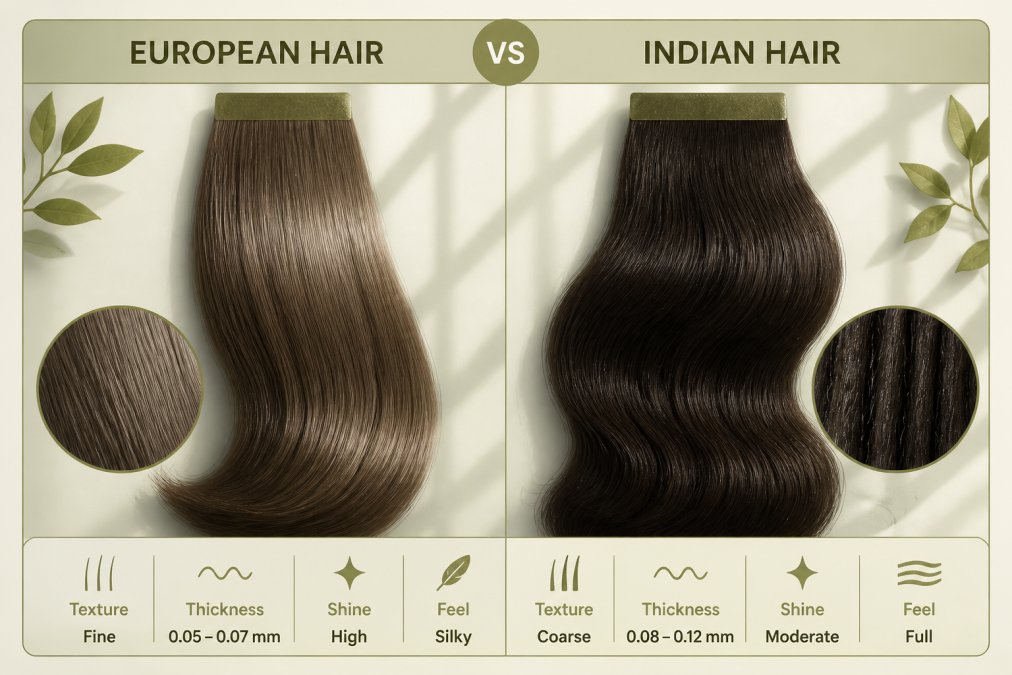
Indian human hair has thicker, coarser strands that hold volume and body exceptionally well. Discover which human hair types deliver the most volume. If you have naturally thick hair or want a wig with visible density and movement, Indian hair delivers that fullness. The texture is stronger and forgiving during styling, it holds curls and waves longer and resists frizz better in humid conditions.
Colour variation also differs significantly. Indian hair offers a wider spectrum of natural colours, from deep blacks to rich browns with warm undertones. If you need a specific shade or plan to colour your wig, Indian hair's natural variation gives you more flexibility.
The appearance factor matters too. Indian hair creates a fuller, more voluminous appearance. Neither is objectively better, it depends on whether you want understated elegance or visible density.
How to Choose Human Hair for a Wig
Start by assessing your natural hair type. If you have thick, coarse hair, Indian hair matches your texture better and looks more cohesive.
Next, consider your lifestyle. Do you style your wig daily or wear it occasionally? Indian hair tolerates daily styling, heat tools, and more vigorous care routines.
Think about your colour goals. If you want a natural-looking wig in your existing shade without extensive processing, Indian hair often works better because it comes in richer, more varied natural tones.
Budget is also a practical consideration. Indian hair lasts longer with proper maintenance. If you're investing in a wig you'll wear for years, Indian hair often delivers better value.
You can explore how to select wig hair texture in depth to match your specific requirements and preferences.
European Human Hair Wigs: Characteristics and Benefits
European human hair comes from donors across the continent and is prized for its fine, silky texture. The strands are naturally lighter and more delicate, which makes them ideal for creating wigs that feel feather-light on the head. Many people report that European hair wigs are more comfortable for all-day wear because they don't create as much weight or tension on the scalp.
The processing for European hair is typically minimal. Because the strands are already fine and manageable, manufacturers don't need to subject the hair to heavy chemical treatments. This means the hair retains more of its natural strength and shine from the start.
European hair blends exceptionally well with fine or thin natural hair. If you're experiencing hair thinning or have naturally wispy hair, a European hair wig creates a seamless transition that looks undeniably natural. The texture match is the key advantage here.
Styling versatility is another strength. European hair holds curls and waves beautifully without requiring as much heat or product. You can achieve a polished, salon-quality look with minimal effort. The hair also tends to have a natural shine that photographs well and looks lustrous under various lighting conditions.
The trade-off is durability and cost. European hair wigs typically last 2-3 years with regular wear and proper care. They're also more expensive upfront, you'll invest significantly more than you would for Indian hair. Additionally, European hair can tangle more easily if you don't maintain it consistently, and the finer strands are more vulnerable to breakage if styled roughly.
Indian Human Hair Wigs: What You Need to Know
Indian human hair comes from donors across India and is known for its thickness, resilience, and rich natural colour. The strands are coarser and denser than European hair, which means the wig holds its shape and volume through daily wear, styling, and washing.
Processing is more involved with Indian hair because the strands are naturally thicker and sometimes require treatment to achieve certain textures or colours. However, this processing, when done properly, doesn't compromise the hair's integrity. Indian hair can withstand heat styling, colouring, and frequent washing without becoming brittle or dull.
The durability advantage is significant. With consistent care and maintenance, Indian hair wigs can last 3-5 years or even longer. This longevity makes Indian hair a smarter investment if you wear your wig regularly. You get more wear out of your money.
Straight Raw Human Hair Weft Bundle Deals - Chinese →
Indian hair excels at creating volume and body. If you want a wig that looks full, thick, and visibly dense, Indian hair delivers that effect naturally. It also resists frizz better in humid or damp conditions, making it ideal if you live in a climate with variable weather or if you're concerned about your wig's appearance staying polished throughout the day.
The versatility is another key benefit. Indian hair accepts colour beautifully and holds curls and waves exceptionally well. You can restyle an Indian hair wig repeatedly without worrying about damage. This makes it perfect if you like to change your look frequently or experiment with different textures.
The potential drawback is that Indian hair can look less natural on people with very fine, thin hair. The thickness of the strands may not blend seamlessly with wispy natural hair, and the wig might appear noticeably added. For people with naturally thick hair, this isn't an issue, the match is perfect.
Durability, Maintenance and Longevity
Indian hair is significantly more durable. With consistent care, you can expect 3-5 years of wear, and some people report even longer lifespans. The thicker strands are more forgiving of styling, washing, and general wear. Indian hair handles heat tools better and resists breakage from brushing or manipulation.
Both types require similar basic maintenance: gentle washing with sulphate-free shampoo, deep conditioning treatments, and minimal heat styling. Indian hair tolerates occasional heat styling without damage.
For detailed guidance on extending your wig's lifespan, explore maintaining human hair wigs for longevity to learn specific techniques and products that maximises durability.
The key difference is that Indian hair is more resilient to mistakes and inconsistent care. If you're new to wig ownership or don't have time for meticulous maintenance, Indian hair is the safer choice.
Cost Comparison and Value for Money
Indian human hair wigs generally range from £300-£500, though high-quality pieces can reach £600. The lower starting price makes Indian hair more accessible if you're new to premium wigs or working within a tighter budget.
At Wigs Ldn, our HD Lace Frontal Wig 13x6 Straight Raw Hair starts at £460 and features raw hair with 200% density for a flawless finish. This price point reflects the craftsmanship and quality of made-to-order construction.

The real value question isn't just upfront cost, it's cost per year of wear. If Indian hair lasts 4-5 years at £400, that's £80-£100 per year. For long-term wear, Indian hair often delivers better value.
To understand how quality affects pricing and longevity, learn how to spot high-quality wigs so you can assess whether a wig's cost aligns with its construction and materials.
Making Your Final Choice
The choice between hair types comes down to four factors: your natural hair type, your styling habits, your budget, and how long you plan to wear the wig.
Choose Indian hair if you have thick natural hair, you style your wig regularly, you want maximum durability, or you prioritise value for money. Indian hair's resilience and longevity make it the practical choice for everyday wear.
At Wigs Ldn, we specialise in bespoke wigs made to order in the UK. Our craftspeople create a wig tailored to your face shape, skin tone, and personal style. We offer Body Wave Virgin Hair Glueless Wig 6x6 HD Lace Closure Wig at £460, featuring 200% density and a pre-styled body wave texture that you can restyle after washing.

Our 30-day money-back guarantee means you can order with confidence. Free worldwide delivery and same-day or next-day options make getting your wig fast and convenient. Most importantly, every wig is glueless, so you get security without the hassle of adhesive or the damage that comes with traditional attachment methods.
The real difference between hair types isn't quality, it's suitability. A wig that suits your hair type, lifestyle, and budget will look natural and feel comfortable. That's what matters. At Wigs Ldn, we help you find exactly that. Our made-to-order approach means your wig is customised to your specific needs. Shop our collection today and discover how the right wig transforms not just your appearance, but your confidence.
Frequently Asked Questions
What is the difference between European and Indian human hair?
Indian hair features thicker strands and naturally darker shades. Both are 100% human hair, but their structural differences affect how they blend with natural hair, how they hold colour, and their overall appearance in wigs. The choice depends on your natural hair type, desired texture, and styling preferences rather than quality alone.
Is European hair better than Indian hair for wigs?
Neither type is objectively better; they suit different needs. Indian hair excels for clients wanting thicker density and darker shades. Research published in the International Journal of Cosmetic Science notes that hair origin alone should not be treated as a reliable indicator of quality. What matters most is selecting the type that matches your natural hair and desired look.
How can you tell whether hair is genuinely European or Indian?
Indian hair features thicker strands and naturally darker tones. However, hair origin alone isn't a foolproof quality marker. Reputable suppliers like Wigs Ldn provide transparency about sourcing and processing. Always verify that hair is ethically sourced, unprocessed (if purchasing raw hair), and comes with a clear description of its characteristics and origin.
Can Indian hair be styled and coloured like European hair?
Yes. Both Indian and European human hair can be coloured, curled, straightened, and restyled when they're raw and unprocessed. Raw Indian hair, like our Premium Single-Donor Raw Straight Hair Bundles (£145.00), accepts colour beautifully and offers long-lasting wear with proper care. The thicker strand structure of Indian hair actually holds colour well and resists fading, making it an excellent choice for clients who want versatility and durability in their styling options.
