

Last Updated: November 12, 2026
Quick Summary
The wig accessories that matter most for secure styling are a wig grip band for glueless daily wear and wig adhesive for lace-front or full-lace pieces on special occasions. A glueless routine with a grip band and melt band takes 10 to 15 minutes and needs no glue at all.
- Wig adhesive gives the strongest, longest-lasting hold; a wig grip band gives the gentlest, most reusable one.
- Patch-test adhesive on the inner wrist 24 hours ahead if your skin is sensitive.
- Brush human hair wigs with a loop-bristle or paddle brush, working from ends to roots.
- Keep heat styling tools below 180°C and always use a heat protectant.
- Store wigs long-term in a satin bag or box to prevent dust and friction.
Table of Contents
- Why Human Hair Wigs Need Purpose-Built Accessories
- Wig Adhesive vs Wig Grip Bands: Which Hold Suits You
- How to Secure a Wig Without Glue: Step-by-Step
- Caps, Liners and Grips That Keep a Wig in Place
- Styling Tools for Human Hair Wigs: Brushes, Combs and Rollers
- Essential Wig Care Accessories for Washing, Drying and Storage
- Sensitive Skin, Adhesive Removal and Comfort Checks
- Order Your Made-to-Measure Wig and Accessories
- Frequently Asked Questions
Why Human Hair Wigs Need Purpose-Built Accessories
Human hair wig accessories are the tools and attachments that hold, protect and style a made-to-measure piece so it looks natural and stays put. Clients often invest in a beautiful handcrafted wig, then wonder why it slips or dulls within weeks. Accessories play a significant part in how a wig performs.
Human hair behaves like your own hair. It absorbs moisture, responds to heat, and tangles when brushed with the wrong tool. A generic grip or a cheap brush can drag on the cuticle, while suitable accessories can help a piece last.
Below, we break down which wig accessories for secure styling actually matter, how to choose between adhesive and grip methods, and the step-by-step fitting routine we recommend. The guidance is practical, and it is aimed squarely at human hair, not synthetic fibre.
Wig Adhesive vs Wig Grip Bands: Which Hold Suits You
Wig adhesive gives the strongest, longest-lasting hold; a wig grip band gives the gentlest, most reusable one. Neither is universally better. The right choice depends on your scalp sensitivity, how often you wear the piece, and how active your days are.
Adhesive suits lace-front and full-lace constructions where you want an undetectable hairline for a special occasion. It demands careful skin preparation and proper removal. Grip bands suit glueless wigs and daily wear, sitting flat against the scalp with no residue. If you are weighing glue against grip, you may want to try the glueless hold first with a wig melt band, which helps lace sit flat and blend without adhesive.
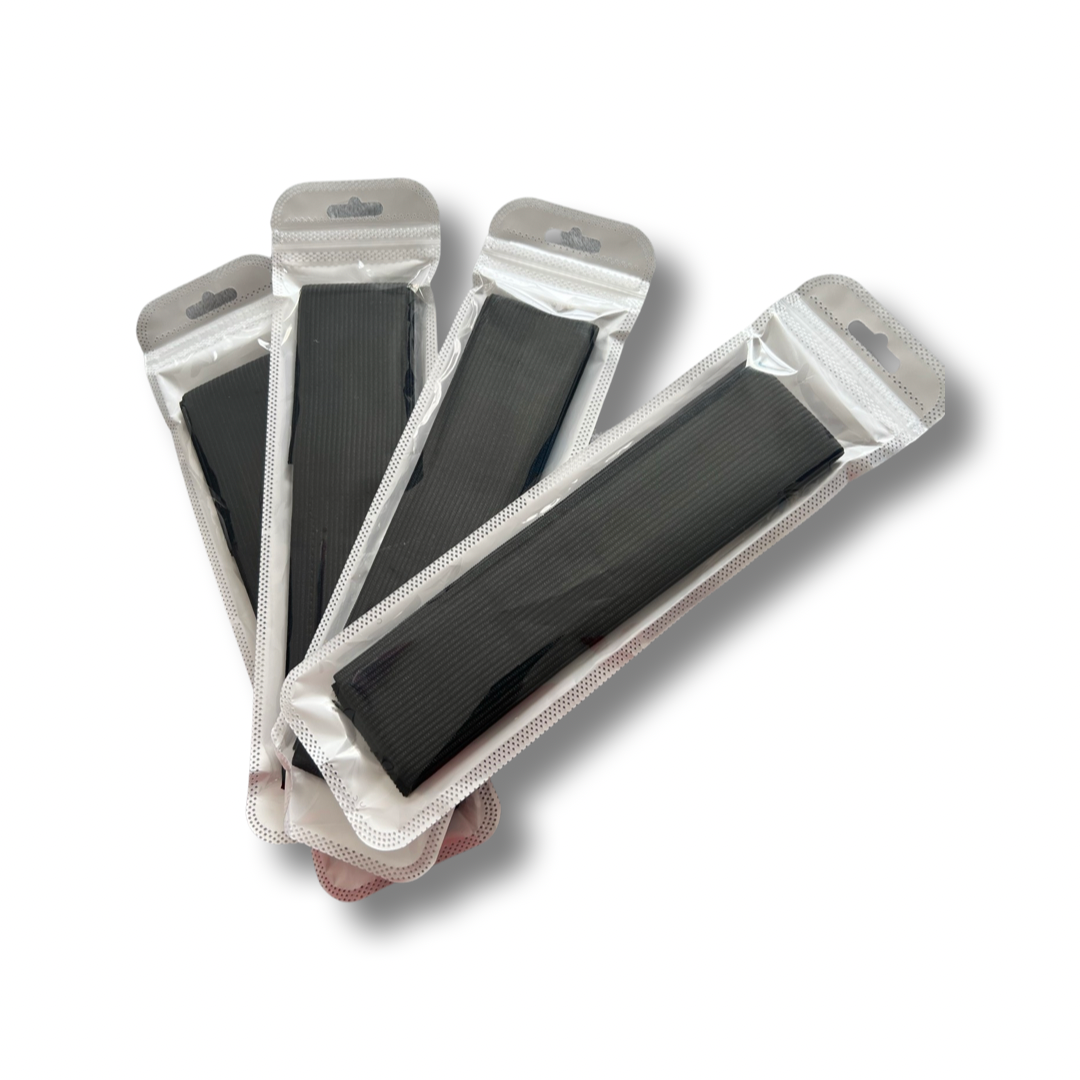
A common mistake is choosing adhesive purely for security when the wearer's skin reacts to tape. Patch-test first, always.
Here is how the two main hold methods compare on the points that matter most.
| Option | Best for | Key difference |
|---|---|---|
| Wig adhesive | Lace-front and full-lace constructions; special occasions | Strongest, longest-lasting hold; needs skin preparation and proper removal |
| Wig grip band | Glueless wigs and daily wear | Gentlest, most reusable hold; sits flat with no residue |
| Wig melt band | Helping lace sit flat and blend | Glueless hold without adhesive |
How to Secure a Wig Without Glue: Step-by-Step
A glueless hold works by anchoring the cap to your own head shape rather than to your skin. Here is the routine we walk clients through.
Total time: 10 to 15 minutes. Difficulty: Beginner.
What you'll need: a wig grip band, a wide-tooth comb, sectioning clips, and a melt band for lace.
- Prepare your natural hair. Braid or flat-wrap it close to the scalp so the cap sits flush. [Time: 5 minutes]
- Fit the grip band. Place it along your hairline, velvet side against the scalp. This creates friction that stops slipping. [Time: 1 minute]
- Seat the wig. Pull the cap on front to back, aligning the hairline with the grip band. [Time: 2 minutes]
- Secure the nape. Adjust any rear straps or clips until the fit feels snug but not tight. [Time: 2 minutes]
- Melt the lace. Lay a melt band along the hairline for a few minutes to press the lace flat. [Time: 5 minutes]
For sport, wind or long events, our guide on how to secure wigs for active lifestyles goes deeper.
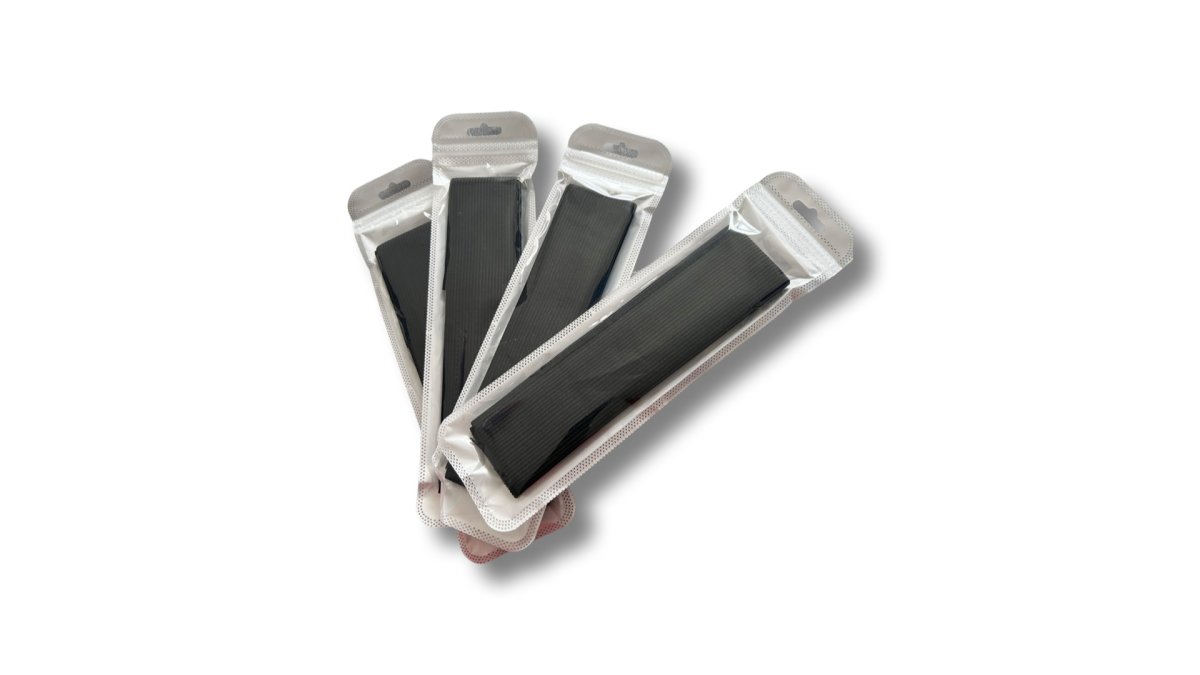
Time needed for each step of the glueless wig routine
Caps, Liners and Grips That Keep a Wig in Place
A wig cap is the base layer that protects both your scalp and the wig, but the right cap depends on your cap construction and how you intend to secure the piece. Stocking caps and hair nets flatten natural hair, while bamboo or cotton liners add breathability for sensitive scalps.
Use this decision guide by cap construction and attachment preference:
- Lace-front with adhesive: choose a thin, low-profile stocking cap or a lace-front liner that stops adhesive touching your natural hairline. A thick cap creates bulk under the lace and makes the hairline look raised.
- Full-lace with adhesive: a full-coverage liner protects the scalp while leaving the lace perimeter free. Avoid liners with a thick seam at the hairline, which can show through the lace.
- Glueless or grip-band wear: a velvet grip band sits directly against the scalp and creates friction. Pair it with a breathable bamboo or cotton liner if you are prone to heat or irritation.
- Sensitive scalp: choose fragrance-free, dye-free cotton or bamboo liners and avoid silicone-backed grips if you have reacted to silicone before. Patch-test any grip band on the inner wrist for 24 hours.
- Active wear: a wide, silicone-backed grip band or a velvet band with a rear adjuster holds better than a plain stocking cap, which can roll at the nape during exercise.
Grips and headbands do the actual anchoring. A velvet grip band holds without adhesive, and a wide headband can double as both styling and security for casual wear. If you are still deciding between a glueless cap and a natural-fit construction, our comparison of glueless vs natural fit wigs explains which setup suits which wearer.
Accessory compatibility matters as much as the accessory itself. A grip band worn over a thick stocking cap adds bulk and can make the wig sit higher; wear the grip directly against the scalp and the cap over it only if the cap is thin.
Watch out: a cap that is too tight causes headaches within an hour. If you feel pressure at the temples, size up or switch to an adjustable-cap construction.
Styling Tools for Human Hair Wigs: Brushes, Combs and Rollers
Human hair has a cuticle layer that can lift when brushed wet or with the wrong bristle, so tool choice affects shine and frizz. Brush human hair wigs with a loop-bristle or paddle brush and detangle with a wide-tooth comb, working from ends to roots. Never use a fine plastic comb on wet hair; it snags the cuticle and causes frizz that no serum will fix.
Match the tool to the job and the cap construction:
- Detangling: a wide-tooth comb or loop-bristle brush on dry or damp hair. Work in sections from mid-length to ends, then roots. A loop-bristle brush is gentler on a lace front because the bristles flex rather than drag the lace.
- Smoothing and finishing: a boar-bristle or mixed-bristle brush distributes natural oils down the hair shaft. Use it on dry hair only; on wet hair it can stretch the cap and loosen knots at the hairline.
- Heatless setting: satin rods and Velcro rollers set waves overnight without heat damage. Human hair holds a curl far better than synthetic, so a light mist of water is usually enough. Roll away from the face on a lace front so the lace is not pulled forward.
- Heat styling: keep heat tools below 180°C and always use a heat protectant. Use a round brush with heat-resistant bristles and avoid pulling at the hairline, where the lace or knots are most fragile.
- Sectioning: sectioning clips hold hair away from the cap while you style. Choose clips with smooth, coated teeth; metal teeth can catch on lace and tear it.
Accessory compatibility is where most damage happens. Wig clips sewn into the cap should sit behind the hairline, not on top of a grip band, or they will pull against the band and cause tension. Pins and clips used for styling should be placed through the wig cap or weft, never through the lace, and removed before storage.
If you are building your kit from scratch, our buyer's guide to the best brushes for human hair wigs covers bristle types, sizes and what to avoid.
Watch out: brushing a lace front from the hairline backwards can lift the lace and loosen the knots. Always brush away from the hairline, not across it.
Essential Wig Care Accessories for Washing, Drying and Storage
Wash a human hair wig regularly with a gentle wig shampoo, then condition mid-length to ends. Rinse in cool water and blot gently with a towel; avoid wringing the cap.
For drying and storage, a wig stand or block keeps the shape while air dries. A poly head or styrofoam head works for display, but for long-term storage use a satin bag or box to prevent dust and friction. Wig pins hold a block steady during styling.
For the full routine, our human hair wig care guide walks through washing, drying and storing in detail.
Sensitive Skin, Adhesive Removal and Comfort Checks
Sensitive scalps need a gentler approach. Choose skin-safe adhesive labelled for cosmetic use, patch-test on the inner wrist 24 hours ahead, and remove residue with a dedicated adhesive remover rather than alcohol, which dries the skin.
Run a comfort check before you leave the house: press along the hairline, tilt your head forward and back, and check the nape. Any pulling means the fit is off. If irritation develops, switch to a glueless grip method and let the skin settle. As with any persistent scalp reaction, speak to a pharmacist or your GP.
Order Your Made-to-Measure Wig and Accessories
Getting the accessories right is half the job. The other half is a wig that fits your head properly in the first place. We make every piece to order in the UK, with a 30-day money-back guarantee and free worldwide delivery, plus same-day and next-day delivery options.
Our made-to-measure wigs are available glueless, so you can skip adhesive and rely on a well-fitted cap and grip band. Customisable textures and colours let you choose a finish, and the glueless option keeps daily wear simple.
Start with accurate measurements using our DIY Wig Head Measurement Kit (£5.00, refunded when you buy a wig), then browse the accessories that hold it all together. Get started with Wigs Ldn and build a secure, natural-looking finish from the first wear.
A secure wig comes down to the right accessories and a cap that genuinely fits. We build every piece to order in the UK, glueless by design, with a 30-day money-back guarantee and free worldwide delivery. Customisable textures and colours let you match your natural hair, and the glueless construction keeps daily styling simple.
Frequently Asked Questions
What is the best way to keep a human hair wig secure?
A combination works best for most people: a wig grip band or cap for everyday grip, plus a melt band along the lace for a seamless finish. If you need extra hold for an event, add skin-safe wig tape at the temples and nape. Made-to-measure sizing matters, which is why Wigs Ldn offers a DIY Wig Head Measurement Kit (£5.00, refunded when you buy a wig).
Do I need wig glue or can I use a wig grip band?
You can use a wig grip band instead of glue in most situations. Grip bands suit glueless wigs, sensitive scalps and daily wear, Wig adhesive gives a stronger, longer-lasting hold for lace-front and full-lace styles, especially in heat or wind, but it needs careful removal to protect your scalp and the lace. Many wearers keep both: grip bands for weekdays, tape or adhesive for occasions.
Are silicone wig grips better than velvet wig bands?
They solve different problems. Silicone grips hold firmly on smooth scalps and suit people with minimal bio hair, while velvet bands feel softer and reduce friction for sensitive skin. Try one of each for a week of normal activity and keep the one that stays put without pressure points.
How often should I replace my wig adhesive or tape?
Replace tape and adhesive whenever the hold weakens, depending on sweat, heat and how often you remove the wig. Lift the edge gently and use a skin-safe adhesive remover rather than pulling. Wig grips and caps should be washed after every few wears and replaced once the elastic stretches or the silicone loses tack, usually every two to three months with regular use.
