

Table of Contents
- What Makes a Wig Look Natural When You Have Alopecia
- Wig Types Compared: Lace, Glueless and No-Lace Options
- Why Human Hair Wigs for Alopecia Beat Synthetic
- Choosing Wigs for Sensitive Scalp Comfort
- How to Secure a Wig with No Hair
- How to Make a Wig Look Natural: Styling and Fit
- What Natural Looking Wigs for Alopecia Cost
- Conclusion
- Frequently Asked Questions
Last Updated: 13 October 2026
What Makes a Wig Look Natural When You Have Alopecia
A wig looks natural when the hairline, density and scalp match your own features. For anyone searching for natural looking wigs for alopecia, the goal is simple: a piece nobody clocks as a wig. According to Alopecia UK's guidance on hair loss, alopecia affects people of all ages and can range from small patches to total hair loss, which means the right wig has to work harder than a fashion accessory. At Wigs Ldn, we make every piece to order. Below, we'll show you exactly how to spot a wig that gives itself away, and how to choose one that doesn't.
The Three Things That Give a Wig Away
Three flaws expose almost every wig: a hard, straight hairline, density that's too thick at the crown, and a cap that lifts at the temples. Fix those and the wig reads as your own hair.
A natural hairline is never a straight line. It recedes slightly at the temples and softens at the edge. Density matters too: most wigs pack too much hair at the crown, which is the single biggest tell. And a cap that doesn't sit flush against a smooth scalp will ripple when you move. Get these three right and the rest follows.
Wig Types Compared: Lace, Glueless and No-Lace Options
Lace wigs give the most realistic hairline, glueless designs are the easiest to live with, and no-lace styles suit anyone who wants zero fuss. Each type solves a different problem, so the right choice depends on how much daily effort you want to spend.
| Wig Type | Realism | Daily Effort | Best For |
|---|---|---|---|
| Lace closure | High, blends with scalp | Low, no glue needed | Beginners wanting a natural finish |
| Glueless | High, secure without adhesive | Minimal, under a minute | Sensitive scalps and daily wear |
| No-lace / headband | Good, instant coverage | Almost none | Quick styling and events |
The 4x4 lace closure sits at the front of the cap, so it blends with your scalp while the rest of the wig stays simple. Glueless designs skip adhesive entirely, which matters if your scalp is tender. No-lace options like a headband wig go on in under a minute and need no skills at all.
Why Human Hair Wigs for Alopecia Beat Synthetic
Human hair wigs for alopecia win on three fronts: they move like real hair, they take heat and colour, and they last far longer than synthetic. Synthetic fibres hold a style out of the box, but they can't be restyled with heat and tend to look dull after a few weeks.

Virgin human hair behaves like your own. You can straighten it, curl it, and colour it. It also sheds and moves naturally, which is exactly what a sensitive scalp needs when you're already dealing with hair loss. The trade-off is cost and care: human hair needs washing and conditioning like your own hair, and it costs more upfront. In practice, that upfront cost spread over a year or more usually works out cheaper than replacing synthetic wigs repeatedly.
Choosing Wigs for Sensitive Scalp Comfort
Wigs for sensitive scalp comfort come down to three things: a breathable cap, no adhesive, and a lightweight construction. A heavy wig with a tight band will irritate a scalp that's already tender from alopecia or treatment.
Look for a soft cap lining and adjustable straps rather than tight combs. Glueless designs help here because nothing sticks to your skin. If you're mid-treatment, check with your clinician before choosing a cap material, since NHS guidance on hair loss notes that scalp sensitivity varies widely between people and treatments.
How to Secure a Wig with No Hair
A wig stays secure with no hair through adjustable straps, a snug cap fit, and optional silicone grip strips, not glue. The trick is getting the cap to sit flush against a smooth scalp so there's nothing for it to slide on.
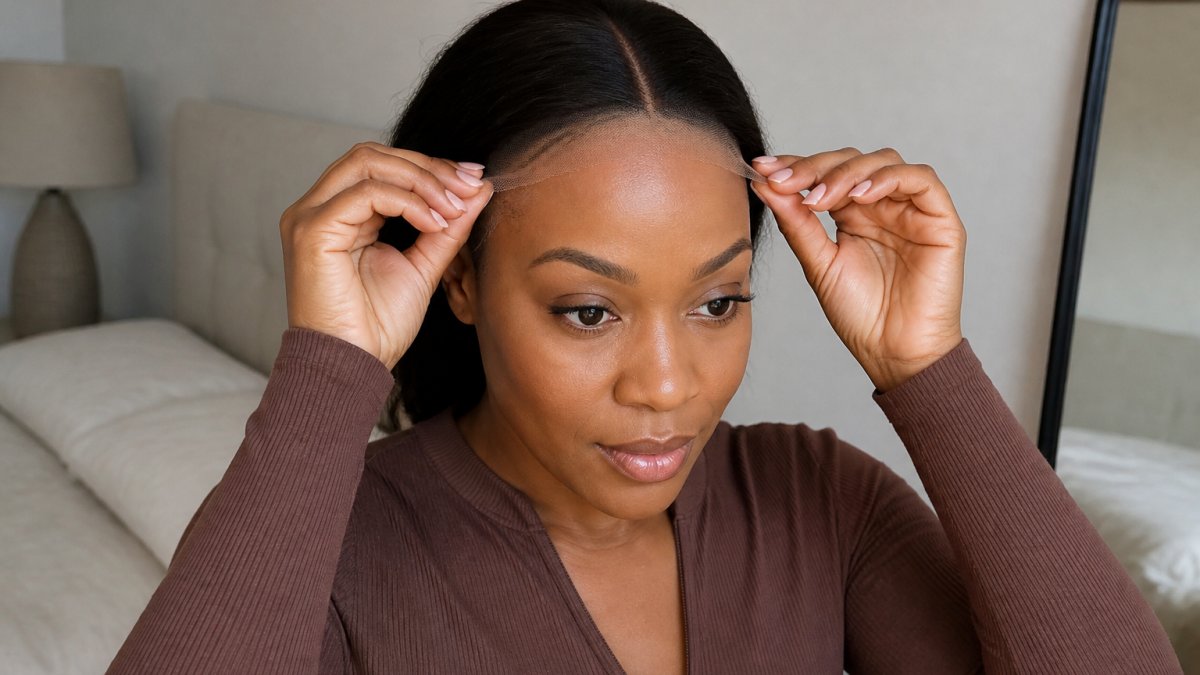
Start by fitting the cap snugly at the nape, then tighten the straps a notch at a time. A wig grip band worn underneath adds friction without adhesive. For extra hold, a small amount of scalp-safe tape at the temples works, but many people with alopecia find straps alone are enough. Test it by shaking your head gently before you leave the house.
Virgin Hair Headband Wigs Lengths 12"-30" Natural 1b Colour →
How to Make a Wig Look Natural: Styling and Fit
To make a wig look natural, customise the hairline, thin the density, and match the partinging to your face shape. An off-the-shelf wig looks like a wig because it hasn't been adjusted to you.
A fringe can hide a receding hairline entirely, which is why our full fringe raw human hair wig, available from 10 to 30 inches, is a popular choice for anyone who wants coverage without lace.
What Natural Looking Wigs for Alopecia Cost
Natural looking wigs for alopecia cost more than mass-produced pieces because the hairline, cap and density are built around you. Expect to pay a premium for virgin human hair, hand-tying and made-to-order construction.
At Wigs Ldn, our no-lace and glueless pieces start at £170, with lace closure wigs at £285 and longer raw human hair styles at £320. Every wig is made to order in the UK, and we offer a 30-day money-back guarantee plus free delivery, with same-day and next-day options available. The price reflects durability: a well-cared-for virgin human hair wig lasts far longer than a synthetic one, so the cost per wear drops over time.
Conclusion
Choosing a wig after hair loss is about more than looks; it's about feeling like yourself again. Start with the hairline, the density and the cap fit, then choose human hair if you want a piece that moves and lasts. Wigs Ldn makes every wig to order, specialises in glueless designs, and backs each piece with a 30-day money-back guarantee. Get started with Wigs Ldn and find a wig that looks and feels like your own hair.
Frequently Asked Questions
What type of wig looks most natural for alopecia?
Human hair wigs with a lace closure or no-lace construction give the most believable finish. A 4x4 transparent lace closure blends into the hairline without adhesive, while no-lace styles rely on a secure cap and headband. Both avoid the shine and stiffness that make synthetic wigs obvious. Matching the texture to your original hair, whether straight, kinky or curly, matters more than the cap style itself.
Are human hair wigs better for alopecia?
Human hair wigs for alopecia look and behave more like your own hair. They can be heat-styled, coloured and treated with the same products you would normally use, which makes blending far easier. They also last longer than synthetic alternatives when cared for properly. If your scalp is sensitive, a virgin human hair wig with a soft cap reduces irritation compared with stiffer synthetic fibres.
How do you make a wig look natural with alopecia?
Focus on three things: the hairline, the parting and the density. Ask for a transparent lace closure or a no-lace style that mimics a natural hairline. Avoid heavy products near the roots. A made-to-order wig in your exact colour and texture removes the guesswork that makes off-the-shelf wigs look obvious.
What wig cap is best for a sensitive scalp?
Look for a glueless cap with a soft, breathable lining and no adhesive. Glueless designs avoid the irritation that glue and tape can cause, which matters if your scalp is tender from alopecia or treatment. A 4x4 transparent lace closure wig is a good starting point because it sits flat without pulling. If you react easily, choose virgin human hair over processed fibres and keep the cap clean between wears.
How can you keep a wig secure if you have no hair?
With no hair to grip, security comes from the cap design rather than clips. Glueless wigs use adjustable straps, combs and a snug cap to stay in place. A wig grip band worn underneath adds friction without adhesive. Headband wigs offer another option because the band holds the unit firmly. Always check the fit before an event and adjust the straps so the wig sits flat against your scalp.
Can you wear a wig every day with alopecia?
Yes, provided you give your scalp breaks and keep the cap clean. Rotate between two wigs if you can, so each has time to air and be washed. Human hair wigs handle daily wear well when you follow a simple care routine: gentle washing, low heat styling and storing on a stand overnight. If your scalp becomes sore, remove the wig and let the skin rest before wearing it again.