

Last Updated: October 29, 2026
Quick Summary
Wearing wigs with long thick hair is easier when you flatten the hair before fitting, using low ponytails, flat braids or a satin wrap to reduce bulk. Choose a cap sized to the braided measurement, not your bare head, and tighten the straps only after the hair is tucked in.
- Flatten hair first by braiding it into two or three flat cornrows close to the scalp.
- Measure over the braided hair, since it can be a full size larger than your bare-head measurement.
- Pin braids in a criss-cross pattern using kirby grips so they lie flat against the head.
- Place anchors at the sides and nape rather than the crown to avoid pressure and headaches.
- Set the adjustable strap after the hair is tucked and the cap is seated, not before.
Table of Contents
- Why Long Thick Hair Makes Wig Fitting Harder
- Preparing Long Thick Hair Before You Put on a Wig
- How to Put Long Hair in a Wig Cap
- Wig Caps for Thick Hair: Choosing the Right One
- How to Flatten Thick Hair Under a Wig
- How to Secure a Wig Over Natural Hair Without Pain
- Troubleshooting Bulk, Slipping and Scalp Discomfort
- Booking a Fitting or Choosing Your Next Wig
- Frequently Asked Questions
Wearing a wig over long, thick hair can feel like squeezing a sleeping bag into a rucksack, so many people find that wearing wigs with long thick hair takes some practice to get right. The bulk pushes the cap up, the sides bulge, and the whole thing can slip by lunchtime.
The good news is that most fit problems come from a few predictable causes. Once you know what they are, the fixes are simple.
Why Long Thick Hair Makes Wig Fitting Harder
Thick, long hair takes up more room than most wig caps are designed for. The extra volume lifts the cap away from the scalp, and the weight of the hair pulls at the cap's edges.
Three things usually go wrong:
- Bulk at the crown and nape. Hair gathers in these areas and pushes the cap upwards.
- Slipping. Smooth hair and a loose cap rarely stay put together.
- Pressure points. Hair pinned too tightly can cause tenderness along the hairline and behind the ears.
Knowing where the bulk sits helps you choose the right cap and method. Flattening and sectioning the hair before the cap goes on is a sensible first step for most fitting issues.
Preparing Long Thick Hair Before You Put on a Wig
Preparation does most of the work. Start with clean, dry hair, and detangle it fully so there are no knots to pull later.
Next, decide how you will manage the length:
- Smooth it back in a low ponytail or a loose bun, then flatten the sides.
- Braid it flat in two or three cornrows if you want the least bulk.
- Wrap it with a satin scarf or a stocking cap for a smooth base.
Keep your prep simple and consistent, because the same method each time makes the wig sit the same way every day when you are wearing wigs with long thick hair.
The steps below summarise how to prepare long, thick hair before the wig goes on.
| Step | What to do | Note |
|---|---|---|
| Clean and detangle | Wash, dry and detangle hair fully | Removes knots that pull later |
| Smooth back | Low ponytail or loose bun, flatten sides | Reduces bulk at the sides |
| Braid flat | Two or three cornrows close to scalp | Gives the least bulk |
| Wrap | Satin scarf or stocking cap | Creates a smooth base |
| Keep it consistent | Use the same method each time | Wig sits the same way daily |
How to Put Long Hair in a Wig Cap
Here is a simple method that works for most long, thick hair:
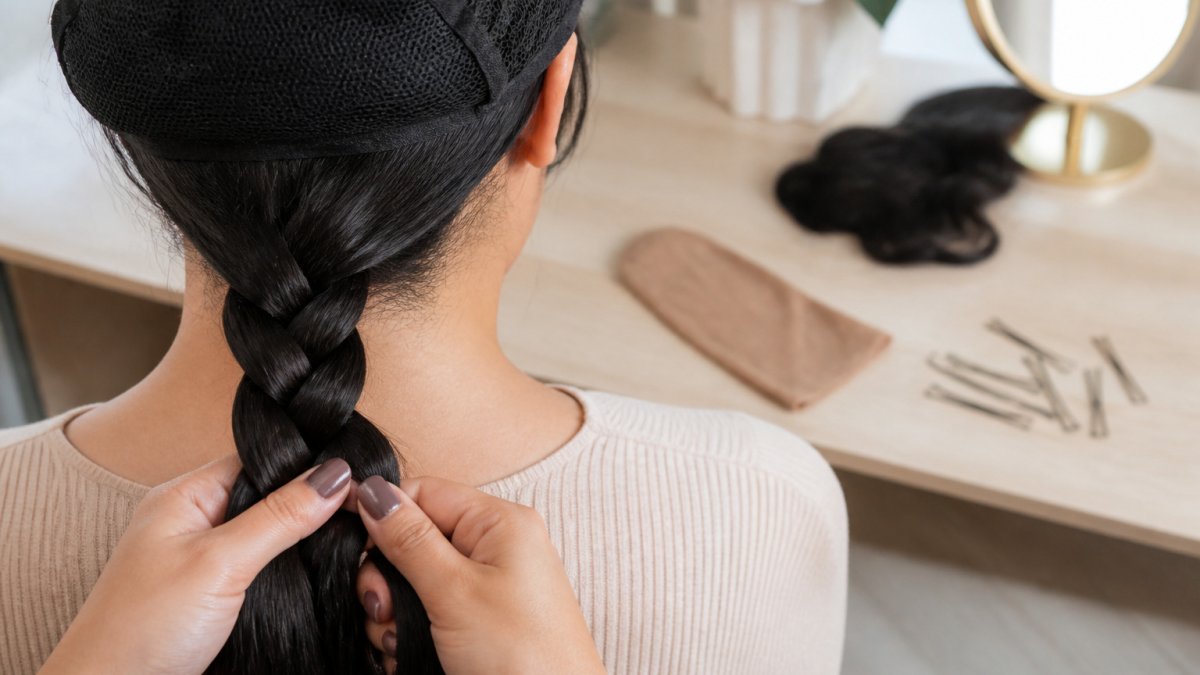
- Flatten the hair. Brush everything back and smooth down any flyaways with a little hair gel or light lotion.
- Braid or twist into sections. Make two or three flat braids along the head, keeping them close to the scalp.
- Pin the braids flat. Use kirby grips placed in a criss-cross pattern so they lie against the head.
- Tuck the ends. Fold any loose ends under the braids so no lumps show.
- Put on the wig cap. Smooth it over the braids, making sure the edges sit neatly around the hairline.
- Check for flat spots. Run your hand over the cap to feel for any ridges, and re-pin if needed.
A common mistake is pinning the braids too tightly. Aim for snug, not painful.
Wig Caps for Thick Hair: Choosing the Right One
The cap you choose affects comfort and fit as much as technique does. Compare the alternatives to standard wig caps that suit thick hair before you decide. For thick hair, the cap has to do two jobs at once: contain volume and stay anchored without pinching.
What to look for in the construction
- Stretch and recovery. A cap that stretches to accommodate braids but springs back will grip the head rather than ride up. Look for caps described as having good stretch recovery, not just 'stretchy'.
- Closed versus open wefting. Closed-weft caps sit flatter against braided hair; open-weft caps breathe better but can show ridges where braids sit underneath. See a clear comparison of monofilament and lace front options to weigh the two. For very bulky hair, a closed-weft or monofilament top tends to give the smoothest silhouette.
- Ear tabs and nape coverage. Tabs that sit behind the ears add anchor points without pressing on the hairline. A cap that stops short at the nape will lift when you turn your head.
- Adjustable straps. Look for a strap with a proper buckle or hook-and-loop range rather than a single fixed setting. You want enough adjustment to tighten after the hair is tucked, not before.
- Combs and clips. Silicone-backed combs grip smooth hair better than plain metal ones. Removable combs are useful because you can reposition them away from tender spots.
Sizing checks before you commit
Measure around the head just above the ears and across the forehead to the nape, then measure again over the braided or flattened hair. The second figure is the one that matters when you have long, thick hair, it can be a full size larger than your bare-head measurement. Compare both against the cap's stated sizing range and choose the size that fits the braided measurement, not the bare one.
Fit checks once the cap is on
- Run a finger around the hairline: the cap should sit flush, with no gap that lets a braid peek out.
- Turn your head side to side and tilt forward: the cap should not shift at the nape.
- Press gently on the crown: if it springs back immediately, the cap is under tension and will ache later; if it stays depressed, it is too loose.
For a discreet, natural finish, our 4x4 HD Lace Closure Wig with Fringe Glueless Virgin Hair Bob Wig (£325.00) is a glueless option with a natural lace top. Visit the wig selection on our site to compare options before you decide.

How to Flatten Thick Hair Under a Wig
Flattening is the key to a smooth fit. Read our guide to a natural scalp looking wig cap for more on making the cap sit flat. Try these steps:
- Use a wide-tooth comb to lift the hair away from the scalp first.
- Apply a light hold product to the roots, not the lengths.
- Wrap the hair in a satin scarf overnight for a smoother base the next morning.
- Keep braids or twists small and low so they don't push the cap up.
These small changes can reduce bulk noticeably without adding discomfort.
How to Secure a Wig Over Natural Hair Without Pain
Security and comfort should go together. Find advice on securing wigs for everyday and active wear. A wig that grips too hard will ache, and one that's too loose will slip. The difference usually comes down to where the tension sits and how it is distributed.
Place anchors where the head can take them
- Sides and nape, not the crown. Combs and clips at the sides and nape spread load across stable areas. Anchors on the crown concentrate pressure and are the most common cause of headaches.
- Stagger the pins. If you use kirby grips on braids, place them in a zig-zag rather than a straight line so no single strip of scalp takes the pull.
- Keep pins off the hairline. A pin sitting on the hairline will press every time you frown or raise your eyebrows. Move it back a centimetre.
- Use silicone-backed combs where the hair is smooth; they hold with less clamping force than plain metal combs.
Set the straps after the hair is in
Tighten the adjustable strap only once the braids or twists are tucked and the cap is seated. Tightening first and then stuffing hair underneath forces the cap to fight the bulk, which is what produces the 'too tight but still slipping' feeling. Aim for a fit where you can slide one finger under the strap at the nape.
Run a tension check before you leave the house
- Raise your eyebrows and frown: no pin should dig in.
- Tilt your head forward for ten seconds: the nape should stay put without you holding it.
- Press behind each ear: if you feel a hard point, reposition the comb or pin.
- Shake your head gently: a small shift is fine; a slide means the strap needs one more notch.
Stage the release during the day
If you feel pressure building after several hours, loosen the nape strap by one setting rather than removing the wig entirely. Removing and refitting midday often leads to over-tightening on the second attempt. If you do take the wig off, let the scalp rest for at least fifteen minutes before refitting, and check for any red marks that persist, those are the spots to move your anchors away from next time.
Choose glueless where you can
A glueless option removes adhesive tension from the hairline entirely. Our Full Fringe Bang Raw Human Hair Wig 10”-30” (£320.00) is a ready-to-wear option with no lace to manage.
Troubleshooting Bulk, Slipping and Scalp Discomfort
Most problems have a quick fix:
- Bulk at the crown: Reduce the number of braids or flatten them further.
- Slipping at the nape: Add a comb or adjust the strap.
- A tender scalp: Loosen the pins and check whether any are sitting over the same spot every day.
- Visible edges: Re-check the cap's hairline and smooth any gaps with a little lightweight hold.
Booking a Fitting or Choosing Your Next Wig
Getting the right fit starts with an accurate measurement. Measure around your head just above the ears and across the forehead to the nape before you order. Learn how to measure your head for a wig so you get the right fit first time.
Every wig at Wigs Ldn is made to order in the UK, so the fit is built around you. Browse our styles at Wigs Ldn to start choosing your next wig.
Choose a method that suits your hair, keep preparation consistent, and don't let bulk or slipping put you off. With the right cap and a secure, comfortable fit, long thick hair can sit under a wig as naturally as it does on its own.
Frequently Asked Questions
Can I wear a wig if I have long, thick hair?
Yes. Long, thick hair can be worn under a wig as long as it is prepared first. The usual approach is to divide the hair into a few sections, braid or twist each one flat against the head, and then cover it with a wig cap. This reduces bulk and stops the hair from pushing the wig up or out of shape. Very thick hair may need a larger wig cap or a slightly looser fit, so check the cap size before you start. Wigs Ldn's made-to-order pieces can be discussed with the team to suit your head size and hair volume.
What is the best way to flatten thick hair under a wig?
The most reliable method is to flatten the hair in sections before the cap goes on. Use flat braids or twists, working from the crown outward, and secure the ends with pins so nothing lifts. Pull the braids gently rather than tightly to avoid tension at the hairline. Smoothing a light holding product over the hair can help it lie flat. Once the cap is on, check for any lumps at the crown or nape and re-pin them before fitting the wig.
How should I put long, thick hair under a wig?
Start with clean, detangled hair and divide it into manageable sections. Braid or twist each section flat against the scalp, then pin the braids so they sit close to the head. Put on a wig cap that is sized for your head and hair volume, smoothing it from the front to the nape. Tuck any loose ends under the cap, then place the wig and adjust the straps or grip so it sits evenly without pulling. Avoid tight braids, as they can cause discomfort over long periods of wear.
